
- 2 November 2026
- Back to overview


Acting Responsibly as the End of Life Approaches
We share our everyday lives with dogs, respect them as sentient individuals and know that their lives are valuable. But how should we act when faced with questions surrounding illness, suffering, the end of life and, ultimately, death? Are we entitled to end the lives of our companions?1
Finding the right answers is not easy. One thing is clear from the outset: there is no universal rule that can answer these questions. How we approach this responsibility is as individual as the relationships we have with our dogs.
There are helpful approaches, reflections and tools that can guide us towards making the best possible decisions. Only by addressing uncertainties and dilemmas openly can we begin to resolve them.
A Preliminary Note
As the end of our four-legged companions’ lives draws closer, we inevitably have to confront death and the possibility of putting them to sleep. During this time, we face uncertainty, fear and particular challenges. Before exploring the practical and emotional aspects, it is worth making a brief preliminary note on the use and meaning of some important terms.
In everyday language, the term euthanasia is widely used to refer to ending a dog’s life without causing suffering. The terms assisted dying and assisted death are less commonly used in this context2. In veterinary medicine, the term euthanasia is particularly well established. The word comes from Greek and is made up of two elements: “eu”, meaning good, and “thanatos”, meaning death. It therefore refers to a good death3.
At the same time, it is important to recognise that the term “euthanasia” carries a heavy historical burden, as it is associated with the crimes committed under National Socialism. At the time, an estimated 300,000 children and adults deemed to be mentally ill or disabled were systematically murdered as part of Nazi killing programmes. Those responsible used the euphemistic term “euthanasia” internally to refer to these murders4.
Although the term remains burdened by its association with these crimes, it continues to be established professional terminology in veterinary medicine5.

The Dilemma
When our dog is seriously ill towards the end of their life, we are faced with difficult decisions: When is it time to let go? Are we allowed to end an animal’s suffering by ending their life? Can I have my beloved dog put to sleep? Or does the dog have a right to a natural death?
We do not have to make this decision alone. Veterinary professionals are there to support us. They assess the dog’s health and can evaluate the situation from a professional perspective.
Alongside diagnostic and therapeutic options, other factors play a role: legal requirements, ethical considerations, the financial resources available and, of course, the emotional bond between human and dog6.
A look at the legal requirements shows how carefully decisions at the end of life must be weighed. The German Animal Welfare Act protects animals’ lives and well-being and requires that there be a reasonable justification for killing an animal7. We must apply a particularly strict standard when assessing whether such justification exists.
After all, killing is the greatest harm we can inflict on a living being8. It is also an irreversible decision that cannot be undone. However, we may consider ending an animal’s life as an option when other measures are no longer possible.
When a dog’s suffering is deemed unbearable, ending their life is considered appropriate. The veterinarians and ethicists Herwig Grimm and Kerstin Weich describe this as killing an animal in what are presumed to be the animal’s best interests9.
At its core, this involves two fundamental ethical principles of protection that stand in opposition to one another: our duty to prevent suffering conflicts with the general principle of protecting life10. German legislation, however, gives priority to protecting animals’ well-being – that is, the duty to prevent (severe) suffering – over protecting an animal’s life. Veterinary professionals are therefore indeed obliged to relieve an animal of their suffering by ending their life when that suffering is so severe that it is no longer compatible with life11.

The Question of Timing ?
Even when we understand the legal standards that apply, the decision at the end of a dog’s life remains deeply emotional. Alongside fear, profound grief and feelings of helplessness, we are often also burdened by guilt and a deep sense of moral conflict12. The question of when we should act is particularly difficult to navigate and often leaves us feeling uncertain.
We need to recognise that it is almost impossible to determine the perfect moment. The expectation that we should nevertheless be able to recognise it can create enormous pressure, sometimes leaving us feeling completely paralysed. We hope for clear signs that will give us absolute certainty that the time has come to make a decision.
However, a dog’s final stage of life does not follow a linear course. Veterinarian Dr Gardner distinguishes between three typical trajectories13:
- Sudden decline: Once a dog reaches a critical threshold, their health can deteriorate rapidly and significantly.
- A gradual, fluctuating decline: Periods of stability alternate with acute health crises. These crises may lead to death, or the dog may recover.
- Gradual deterioration: Chronic, slowly progressing illnesses lead to a steady decline in strength, step by step.
In all three cases, we need to discuss the way forward regularly with the veterinary professionals responsible for our dog’s care. Decision-making aids can also help us. They allow us to assess our dog’s condition carefully at home, too, and make considered decisions.

Tools for Assessing Quality of Life
Many people would probably prefer not to have to make this decision at all. The thought that their dog might one day simply fall asleep peacefully and not wake up again is a comforting one. Underlying this is the understandable feeling that we do not want to judge another being's life or death. At the same time, there is the fear of making the wrong decision, particularly when it is so final and irreversible.
Dr Mary Gardner's Life Quality Tool can help us assess a dog's quality of life in detail. The questionnaire guides us through the key aspects of a dog's life in their final stages, helping us gain a clearer picture of their actual quality of life.
The answers are assigned points depending on whether a problem occurs frequently, occasionally or not at all. The total score indicates how severely the dog's quality of life is affected and what steps are recommended. These range from initial discussions with a vet and palliative care or hospice support to considering euthanasia or a supported natural death. Check out the questionnaire here.
Another professionally reviewed tool specifically designed for dog guardians is the assessment form How Do I Know When It's Time?, provided by the veterinary teaching hospital at Ohio State University. The somewhat cumbersome HHHHHMM scale offers further guidance, covering the key areas of a dog's life. Another German-language quality-of-life questionnaire was originally developed to assess the effects of chronic pain. This German-language brochure brings together suggestions and practical advice for the final stage of life of animals in our care. It is worth looking at several questionnaires and choosing the tool that best suits your own circumstances14.

Palliative Care and Hospice Care
In the past, elderly and ill dogs were often put to sleep much earlier. Today, however, veterinary medicine allows us to provide much more extensive care. We have access to modern diagnostic techniques, specialised treatments and a wide range of supportive measures15.
However, we must bear in mind that veterinary treatments can also place a burden on the animal. Intensive care does not automatically mean that it is the best option from the dog's perspective. The dog's individual personality also plays a role, including how they cope with treatment, stress and pain16.
Towards the end of a dog's life, the aim of veterinary care may change: away from curing the illness and towards providing the best possible medical support17. If we have the personal resources to do so, including time, money and the emotional capacity to cope, palliative care through to hospice care may be an option18.
Palliative care involves relieving the symptoms of an illness or condition without curing the underlying cause. However, the question remains as to how long such care is appropriate19.
Hospice care is a specialised form of care. It involves medically supported care that aims to provide the animal with as much comfort and quality of life as possible until natural death or until the decision is made to actively end their life20. Death is treated as a natural process21.
Both approaches are well established in human medicine, but veterinary medicine is still a relatively young field in this respect22. A 2024 study shows that increasing numbers of vets in Germany, Austria and Switzerland are exploring palliative and hospice care and incorporating these approaches into their own practices23.
However, there are also critics. They fear that palliative and hospice care may unnecessarily prolong suffering. They also argue that, for elderly and ill dogs, it is not justifiable to hope for a natural death.
Since the dying process itself can be distressing, it is reasonable to ask whether a natural death is necessarily a peaceful and dignified one24. To gain a clearer understanding, we should familiarise ourselves with the natural dying process in dogs.

Dying and Accompanying the Dying Process
In the final days and hours, the body and behaviour of a dying dog change significantly. Every dying process is individual and may manifest in different ways. Some dogs may wish to withdraw during the last hours or days of their lives and seek out secluded places to be alone. They may show signs of pain or restlessness, sometimes in an intensified form, depending on the underlying condition.
Unusual body postures, trembling, writhing, convulsions or paddling movements may occur. Some dogs whimper or cry out. Near-comatose states may also occur. Many dogs lose control of their bladder and bowels. As the process progresses, restlessness and agitation may occur, but so may a complete lack of responsiveness. A lack of blinking, fixed stares, backward arching of the neck and head, prolonged pauses in breathing, gasping breaths and, finally, cessation of breathing are also part of the dying process25.
Understanding how the process may unfold is a prerequisite for assessing the responsibility involved in caring for one's own dog. Anyone who decides to provide compassionate care until the natural end of life must be prepared for the fact that this process can be enormously physically and psychologically demanding, both for the dog and for oneself.

When We Decide to Have Our Dog Put to Sleep
Having a dog put to sleep is often the ultimate test of trust between the caregiver and the veterinary team. Precisely because this moment is so distressing for both sides, it can help to have an open conversation well in advance. It is important that we, as caregivers, feel that our concerns are taken seriously by the treating veterinary professionals.
We should be aware that veterinarians have a duty to monitor quality of life very closely and to prevent suffering as early as possible26. It is advisable to speak openly about how the dog is doing and how much time and resources we can invest in pain management, comfort measures or specialised care.
If we feel that our concerns and considerations are met with little understanding by the veterinary team, this can leave us feeling uncertain. In such cases, seeking a second opinion or even switching to a more empathetic practice may be helpful. However, we must also be honest with ourselves. Of course, we should not keep switching practices simply to obtain confirmation of our own views.
When our own dog is in the final stage of life, it is normal to worry a great deal. Our minds are constantly racing, and our nerves are on edge. Making the decision to have our dog put to sleep is difficult. Learning more about the process and what to expect can help us prepare for it.
Having a dog put to sleep is not only possible at a veterinary practice; many practices also offer home visits for this sensitive appointment. Another option is a mobile veterinary service specifically designed to visit dogs and their human companions at home. For some, being in familiar surroundings provides significant relief. It can be helpful to discuss any questions or wishes regarding the process of putting your dog to sleep with the veterinary practice before the scheduled appointment.
An appointment to have your dog put to sleep at the practice or at home usually begins with a conversation. The veterinarian explains the procedure and answers any outstanding questions. The process of putting a dog to sleep can begin with a step to calm the dog. For this purpose, a sedative is injected into a muscle using a syringe. This preparatory step is not always necessary, and whether it would be helpful in the particular situation is decided on an individual basis. If this option is chosen, the treating veterinarian should ensure that suitable medication is selected. It should not cause irritation at the injection site, which could lead to pain. Here, too, an open conversation with the veterinarian can help prevent stress and anxiety for the dog.
Once the dog is calm and relaxed, an intravenous catheter is placed to allow the medications to be administered safely. First, the dog receives a medication that induces deep anaesthesia. In this state, the dog is no longer aware of their surroundings. Only then is the medication used to put the dog to sleep administered. It causes the heart, breathing and brain to stop functioning. After a few minutes, the veterinarian checks whether heart and breathing sounds have ceased in order to confirm death27.
A dog who has died naturally or been put to sleep can be cremated. The dog can initially remain at the veterinary practice or be taken away by the mobile veterinary service. The dog is then collected from the practice and taken to the pet crematorium. Some time later, the ashes are either sent to you or can be collected in person from the crematorium.
Cremation involves certain costs and is therefore not an option for everyone. In that case, the dog can remain at the veterinary practice for a small fee and will be collected by a specialised animal disposal service (technically referred to as animal carcass disposal). It is also possible to take your dog home after they have been put to sleep and bury them28.

Conclusion
Caring for seriously ill or dying dogs is one of the greatest challenges we face. It is emotionally exhausting and takes a great deal of strength. Decisions about an animal’s end of life are never easy and cannot be answered by general rules.
As part of grieving, we want to hold on to the time we have shared. Naturally, we wish for our dog to continue living well for as long as possible. Nevertheless, we must be careful that our desire not to say goodbye too soon does not conflict with our dog’s well-being.
To provide our dogs with the best possible care, we can work with their veterinarians to develop an individual care plan. Through palliative and hospice care, we can shape the final stage of life so that our dog experiences as much comfort, security and quality of life as possible.
It is normal to struggle with uncertainty, fear and feelings of guilt. Tools to help assess quality of life, along with open conversations with veterinarians, can provide valuable guidance and support.
Ultimately, every decision is individual, and every situation is unique. What matters is the responsibility we take on and the care we provide for our dog until the very end.


Behavior and the Ability to Adapt
I am a veterinarian and work in the field of science communication related to agricultural animal husbandry. In recent years, thanks to the dogs in my life, I have had the opportunity to engage particularly deeply with the topics of end-of-life care, dying, and euthanasia. My older dog, Lotti, was diagnosed with cancer in 2023, and what had been slowly looming over us for years suddenly loomed large and menacing. Her days were numbered. But as always, my dog Lotti wrote her own rules.
Although the ultrasound showed that the tumor was located near the bladder, we were unable to determine what type of cancer it was until the very end. The tumor grew in such an unfavorable location that surgery—and thus a more precise pathological diagnosis—was not possible.
The first few months after the diagnosis were very difficult. I tried everything I could to find out what kind of tumor it was. I was determined to pursue every possible treatment to restore my dog’s health as much as possible. Although the tumor grew slowly, it caused her to urinate very frequently, and the larger it became, the more severe her abdominal pain was.
After the intense initial phase, things settled down a bit. I had to come to terms with the fact that we were only treating her symptoms. Surgery, chemotherapy, or radiation were out of the question due to the lack of a precise diagnosis. Over the next few months, caring for her and spending time together took center stage. Our daily routine consisted of regular visits to the vet’s office to monitor her health and ensure she was receiving the necessary medication.
Then the end of her life drew ever closer. Although I looked into the options for hospice care quite early on, looking back, I have to say that it would have been better for us as a dog-human team if I had called the way I cared for her “hospice” sooner. Because this approach comes with helpful tools and strategies. And it helps immensely when you actively make the most of everything to ensure the best possible quality of life during that very final stage. Although I’m a veterinarian myself and had a very good veterinary practice at my side, this particular perspective on hospice care is still in its infancy in veterinary medicine.
In hospice care, death is more front and center. It isn’t pushed aside, but is a constant companion, and as a result, it loses some of its terror. Nevertheless, it remains a challenge to carefully assess whether and when to decide to actively end an animal’s life. In addition to these professional perspectives, it also helped me to explore various aspects of grief. For example, about a year after the diagnosis, a bittersweet sense of grief crept in—a foreboding feeling of loss, even though my dog was still alive. This grief is called “anticipatory grief.”
I experienced this grief especially during particularly beautiful moments with Lotti. Because I was certain then that she would be experiencing that moment for the last time. The last visit to her favorite forest, the last time at the Baltic Sea or on the banks of a small river where the waves glisten in the August sun and life thrives everywhere.
After her cancer diagnosis, she lived for about two more years. Toward the end, I kept a very close eye on her quality of life. Months turned into weeks. And in the end, I was planning only a few days ahead. I was in close contact with her vet’s office and worked with them to carefully weigh all the options. I considered ethical standards regarding animal welfare, veterinary responsibility, and our individual circumstances—that is, hers as a dog and mine as her caregiver.
Ultimately, I decided to have her euthanized on a good day. She certainly would have lived a few more days or perhaps weeks, but her pain was growing increasingly severe and her body was becoming more and more unstable. Looking back, I think it was the right decision not to let her die a natural death. Given her physical condition, that would not have been compatible with my ethical standards regarding animals. And this is the insight I’d like to share: It’s better to make the decision on one of her last good days than to let more and more truly bad days lead to a natural death.
All of this took an incredible amount of energy. I put everything else in my life on hold and really gave it my all. Some time has passed now, and things have returned to a more balanced state. The final stage of our dogs’ lives comes with a lot of responsibility.
Resources
1. The book “Companion Animal Ethics” discusses the question of killing companion animals using various ethical theories. Chapter 12 is devoted specifically to the care of sick animals and decisions about the end of their lives.
2. Hofmann, H. (2014). The gentle death: Euthanasia in animals. p. 50 ff.
3. Voigt, L. C. Studies on pet owners' euthanasia decisions regarding decision-making, handling, and coping with grief. p. 4.
4. Vahle, A. (2024). Investigation of the deaths at the University Psychiatric Hospital Frankfurt am Main during National Socialism against the background of “euthanasia”. p. 10.
5. Voigt, L. C. Studies on pet owners' euthanasia decisions regarding decision-making, handling, and coping with grief. p. 4.
6. Springer, S. & Grimm, H. (2018). Euthanasia as a topic in veterinary medical ethics. p. 131.
7. Animal Welfare Act as published on 18 May 2006 (Federal Law Gazette I pp. 1206, 1313), most recently amended by Article 2(20) of the Act of 20 December 2022 (Federal Law Gazette I p. 2752)
8. Hirt, A., Maisack, C., Moritz, J. & Felde, B. (2023). Animal Welfare Act Commentary. Verlag Franz Vahlen, Munich. p. 147.
9. Grimm, H. & Weich, K. (2015). No suffering at any cost: Killing as an expression of moral respect? p. 208.
10. Springer, S. & Grimm, H. (2018). Euthanasia as a topic in veterinary medical ethics. p. 130; Binder, R. (2018). Euthanasia of companion animals: Animal welfare law between protection of life and reduction of suffering. p. 120 ff.
11. German Bundestag (1999). Report on the state of development of animal welfare. p. 52.
12. Hansmann, B. & Maschler, M. (2018). What should be considered from a psychological and psychotherapeutic perspective when supporting grieving pet owners? p. 150.
13. Gardner, M. (2021). It's Never Long Enough: A practical guide to caring for your geriatric dog: A practical guide to caring for your geriatric (senior) dog. p. 395
14. Of course, there are also recognized guidelines for veterinarians in Germany, such as the “Decision aid for the euthanasia of small animals and companion animals.”
15. Springer, S., Axiak Flammer, S., & Dürnberger, C. (2024). “Veterinary medicine is not finished when I have diagnosed an incurable disease, that's when it starts for me.” A qualitative interview study with small animal veterinarians on hospice and palliative care. p. 9.
16. Gardner, M. McVety, D. (2017). Treatment and Care of the Geriatric Veterinary Patient. p. 299
17. Hendrix, L. (2023). Animal Hospice and Palliative Medicine for the House Call Veterinarian. p. 2.
18. The English-language textbook “Hospice and Palliative Care for Companion Animals: Principles and Practice” covers both topics extensively.
19. Sandøe, P., Corr, S. & Palmer, C. (2015). Companion Animal Ethics. p. 189.
20. Gardner, M. & McVety, D. (2017). Treatment and Care of the Geriatric Veterinary Patient. p. 290
21. Springer, S. Axiak Flammer, S. & Dürnberger, C. (2024). “Veterinary medicine is not finished when I have diagnosed an incurable disease, that's when it starts for me.” A qualitative interview study with small animal veterinarians on hospice and palliative care.
22. Goldberg, K. J. (2016). Veterinary hospice and palliative care: a comprehensive review of the literature. p. 369.
23. Springer, S., Axiak Flammer, S., & Dürnberger, C. (2024). “Veterinary medicine is not finished when I have diagnosed an incurable disease, that's when it starts for me.” A qualitative interview study with small animal veterinarians on hospice and palliative care.
24. Selter, F., Persson, K., Kunzmann, P., & Neitzke, G. (2023). End-of-life decisions: A focus group study with German health professionals from human and veterinary medicine. p. 5 ff.
25. Gardner, M. (2021). It's Never Long Enough: A practical guide to caring for your geriatric dog: A practical guide to caring for your geriatric (senior) dog. p. 451.
26. Hofmann, H. (2014). The gentle death: Euthanasia in animals. p. 52 ff.
27. To confirm death, veterinarians usually check several criteria in combination. These can include the absence of a pulse and respiratory arrest, the absence of key reflexes (e.g., corneal and interdigital reflexes), the absence of heart and breath sounds, and graying of the mucous membranes. Only the onset of rigor mortis is considered an unambiguous single criterion. Niggemann, J. R. & Eberspächer-Schweda, E. (2018). Accepted and recommended euthanasia methods – an overview for small animal practice. p. 141.
28. Some legal requirements must be observed here; for more information, see here.

CurlyFeed Material for DogsCurly is our vegan DHA and EPA oil made from algae. A high-quality Omega 3 oil for dogs that can specifically support the health of your companion.Why omega-3 is so importantOmega-3 fatty acids are essential for many bodily functions: they support the heart and circulation, promote brain development, can have anti-inflammatory properties and contribute to healthy skin and a shiny coat.In our detailed blog post you can find out what DHA and EPA are important for and what is special about Curly.Curly's BenefitsCurly is made from 100% pure algae oil - no unnecessary omega-6 fatty acids, no calorie trap as you only need a small amount.The vegan and environmentally friendly alternative to salmon oil for dogs - Good for your Dog and the Planet.Our oil for Curly comes from the microalgae Schizochytrium sp. - one of the few types of algae that naturally produce a very high concentration of DHA (docosahexaenoic acid) and EPA (eicosapentaenoic acid). It is also easy to grow and is cultivated sustainably in closed tanks in the USA. This means we can guarantee that our algae do not come from the sea and do not jeopardise marine ecosystems and the nutritional basis of fish.Feeding RecommendationThe demand for EPA and DHA can vary depending on the dog's age, activity and any existing medical conditions. Our Curly is a highly concentrated algae oil containing approx. 378mg DHA and 95mg EPA in 1ml.We recommend a dosage of 1ml per 10kg body weight. One teaspoon corresponds to approx. 4ml.Curly can be optimally combined with our kibble Greta, canned food Pauline and our home-cooking recipes.StorageAfter opening, Curly should be stored in a cool place protected from light, ideally in the refrigerator, as the algae oil develops an intense marine odour and taste when exposed to light and at room temperature, although this does not have a negative effect on the potency of the oil.Let your dog decide!
Content:
100 Milliliter
(€0.20* / 1 Milliliter)

GretaComplete Food for DogsGreta is our complete food for adult dogs by Vegan4Dogs.Developed in collaboration with experts from the field of animal companion nutrition it meets the nutritional requirements for a balanced diet for (vegan) dogs.To provide your dog with energy, Greta comes with easily digestible rice combined with potatoes. Canola oil complements the energy of the carbohydrates and provides strength.The best of pea protein along with lentils, sunflower seeds and flax seeds provide your dog with protein for its maintenance metabolism. Carrots and beet root refine Greta's taste. Lovage adds its aromatic flavour.Savory, papaya leaves and fructooligosaccharides support the digestion along with chestnut.Cranberries encourage urine acidification.The algae Schizochytrium limacinum provides omega 3 fatty acids (DHA).Sea salt and seaweed meal provide essential minerals and are optimally complemented by carefully chosen additives.With L-carnitine and taurine as well as essential vitamins like B12 and minerals Greta is a complete and balanced food.Feeding RecommendationEach dog is different; you know your dog the best. Adjust the amount of food according to the vitality, age and health of your dog. Take care to always provide sufficient amounts of fresh water.Let your dog decide!
Content:
2 Kilogramm
(€7.75* / 1 Kilogramm)
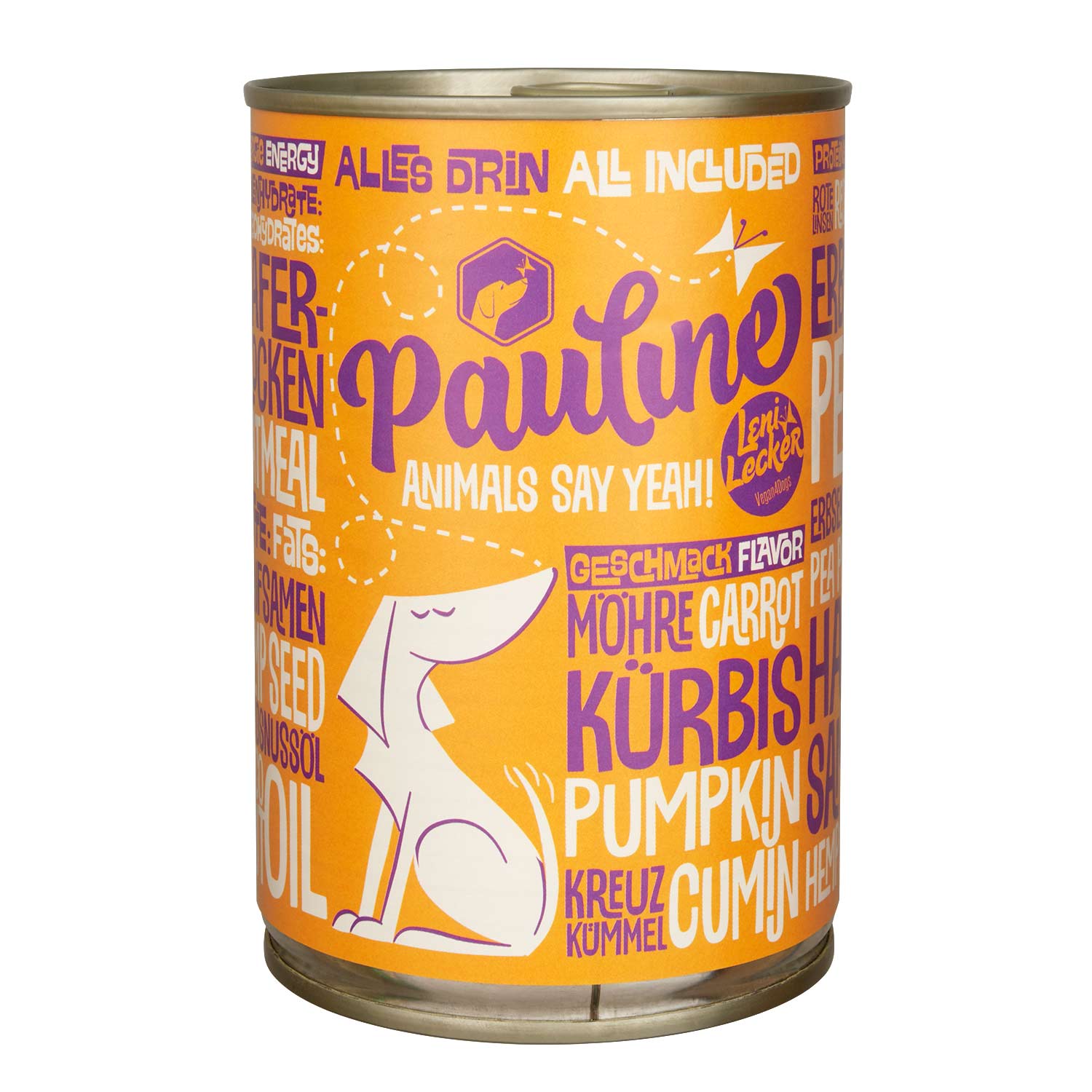
PaulineComplete Food for DogsPauline is our vegan canned food by Vegan4Dogs. After 2 1/2 years of development with many trials and flavours, our test crew "Eddie and Vriends" decided on the ingredients of Pauline.Developed by Leni Lecker in collaboration with experts in the field of animal nutrition. As a complete food, Pauline provides all the necessary nutrients for adult dogs according to their needs.Pauline offers protein from red lentils, peas, hemp seeds, oat flakes and pea protein. In addition to protein, the hemp seeds also provide a healthy source of fatty acids, which we have supplemented with coconut oil.Carrot, pumpkin, tomato paste and cumin refine the taste. To complete Pauline, vitamin B12 and co. are of course also included.For details, check out the composition.Feeding Recommendation5 kg Dog: 200g10 kg Dog: 400g15kg Dog: 600g20 kg Dog: 800g30 kg Dog: 1200g40 kg Dog: 1600gEach dog is different; you know your dog the best. Adjust the amount of food according to the vitality, age and health of your dog. Take care to always provide sufficient amounts of fresh water.Good to know: Why we opt out of the organic certification for PaulineWe don't compromise when selecting ingredients for Pauline. The red lentils, pumpkin, and carrots come from farms that practice natural farming methods. This means these crops are grown without the use of synthetic chemical pesticides or artificial fertilizers.You might be wondering, however, why you don’t see an official organic certification label on the can. There’s a reason for this which is important to us for your dog’s health:Optimal Nutrition: To ensure that Pauline is a complete and balanced diet, we add essential nutrients such as vitamin B12.Regulations: Current legislation often does not allow for organic certification when such additives are included.We made a conscious decision: nutritional safety comes before certification. This ensures that your dog gets all the vitamins they need, while the quality of the ingredients in the can continues to meet the high standards you expect from us.Let your dog decide!
Content:
400 Gramm
(€1.15* / 100 Gramm)

V-CompleteSupplement for homemade vegan dog food 'Made in Germany'.Complementary Food for DogsDeveloped by Leni Lecker in cooperation with experts from the field of veterinary medicine. V-Complete rounds up your homemade dog meal with vitamins, minerals and trace elements as well as methionine and tryptophan which are essential for the health of your dog.V-Complete offers you the opportunity to be your own chef and to satisfy your dog's preferences. That enables you to show consideration for allergies and to create a menu according to your dog's needs. What is more satisfying than cooking for the whole family and eating together.With V-Complete you supplement everything that is necessary such as vitamin B12 and calcium and you can prepare a complete and delicious meal. Here you find our recipe recommendations.Feeding recommenation is 2g per 5kg body weight added to your homemade meals following our general feeding recommendation for V-Complete.V-Complete contains L-carnitine and taurine.V-Complete is suitable for adult, non-pregnant, non-lactating dogs.V-Complete is also suitable for dogs with an allergy to animal protein.All ingredients are carefully selected and of course vegan.We wish you pleasant meal preparations
Content:
650 Gramm
(€4.91* / 100 Gramm)
More Articles
-
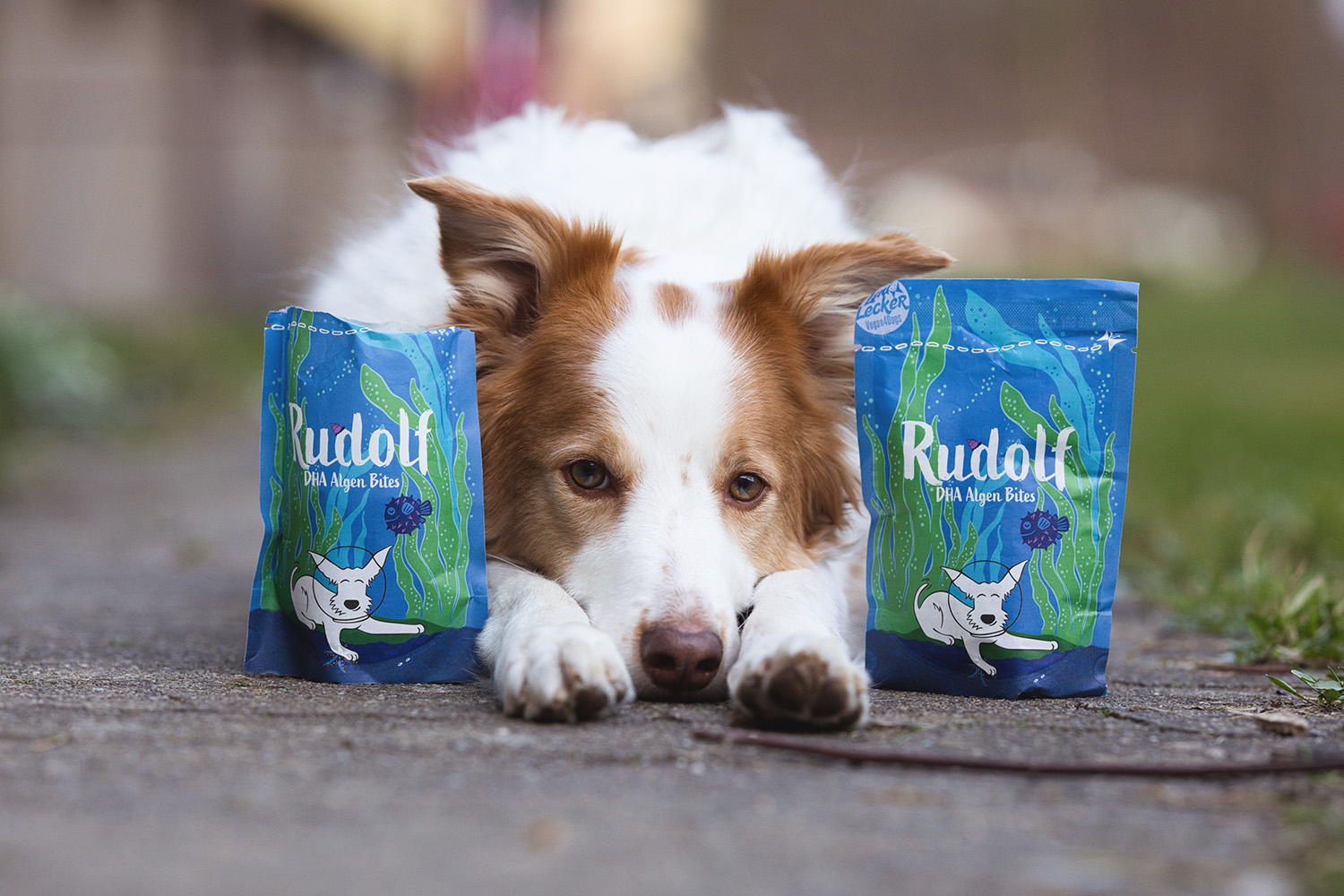 Our new dog treat Rudolf – DHA Algae BitesRudolf DHA Algae Bites are vegan dog treats with omega-3 power from algae – sustainable, nutrient-rich, and made with love....Read More
-
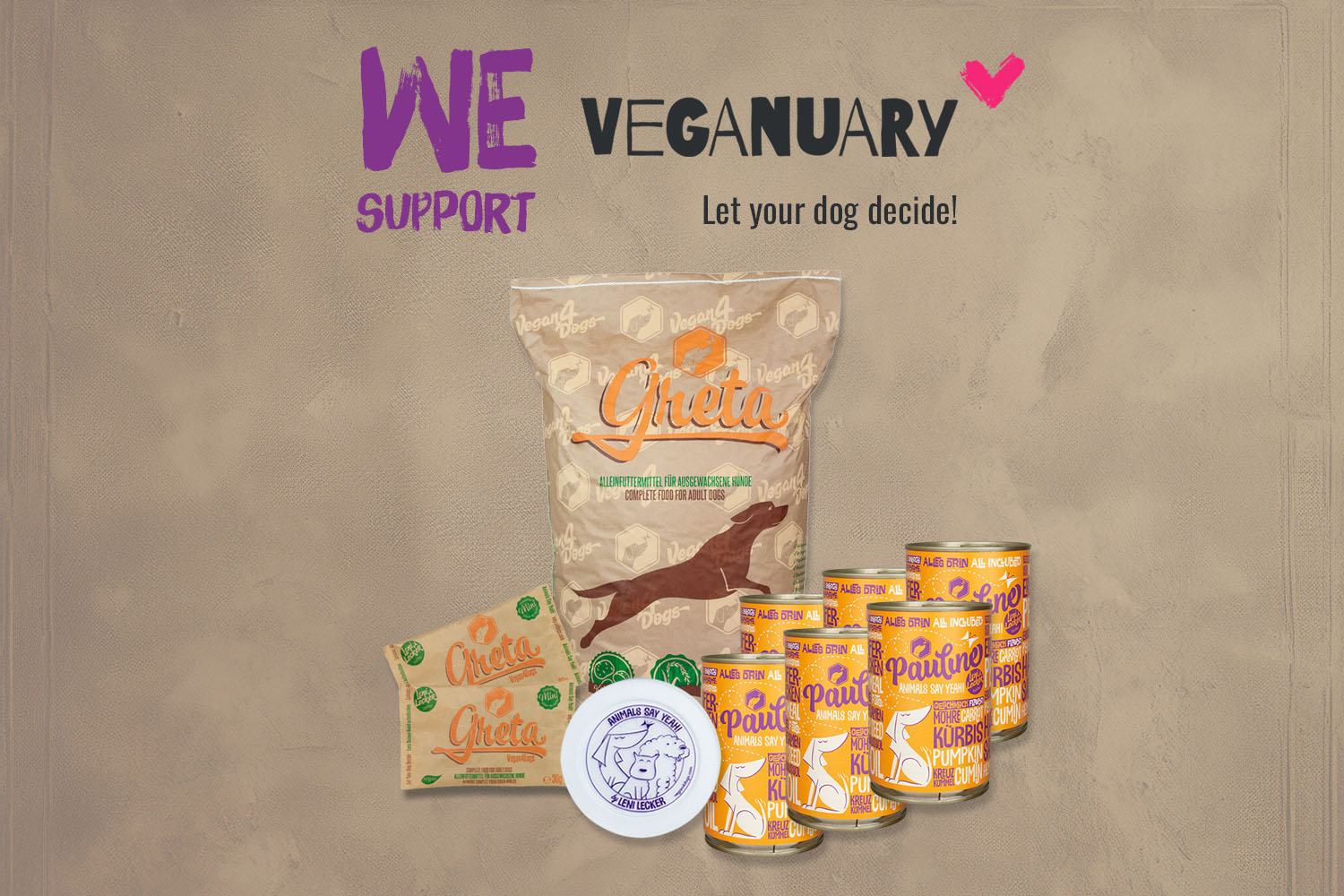 Veganuary 2026🌱 Try a vegan diet this January – for you and your dog! Find tips, benefits, and delicious food ideas in our blog.Read More
-
 The Dog a Wolf! Or maybe Not?In this article, we explore how much wolf remains in today’s dogs and whether a meat-free diet truly goes against their nature.Read More
-
 Curly - Our DHA oil from algae has arrived!Our popular product is making a comeback - now as high-quality DHA and EPA oil from algae.Read More
-
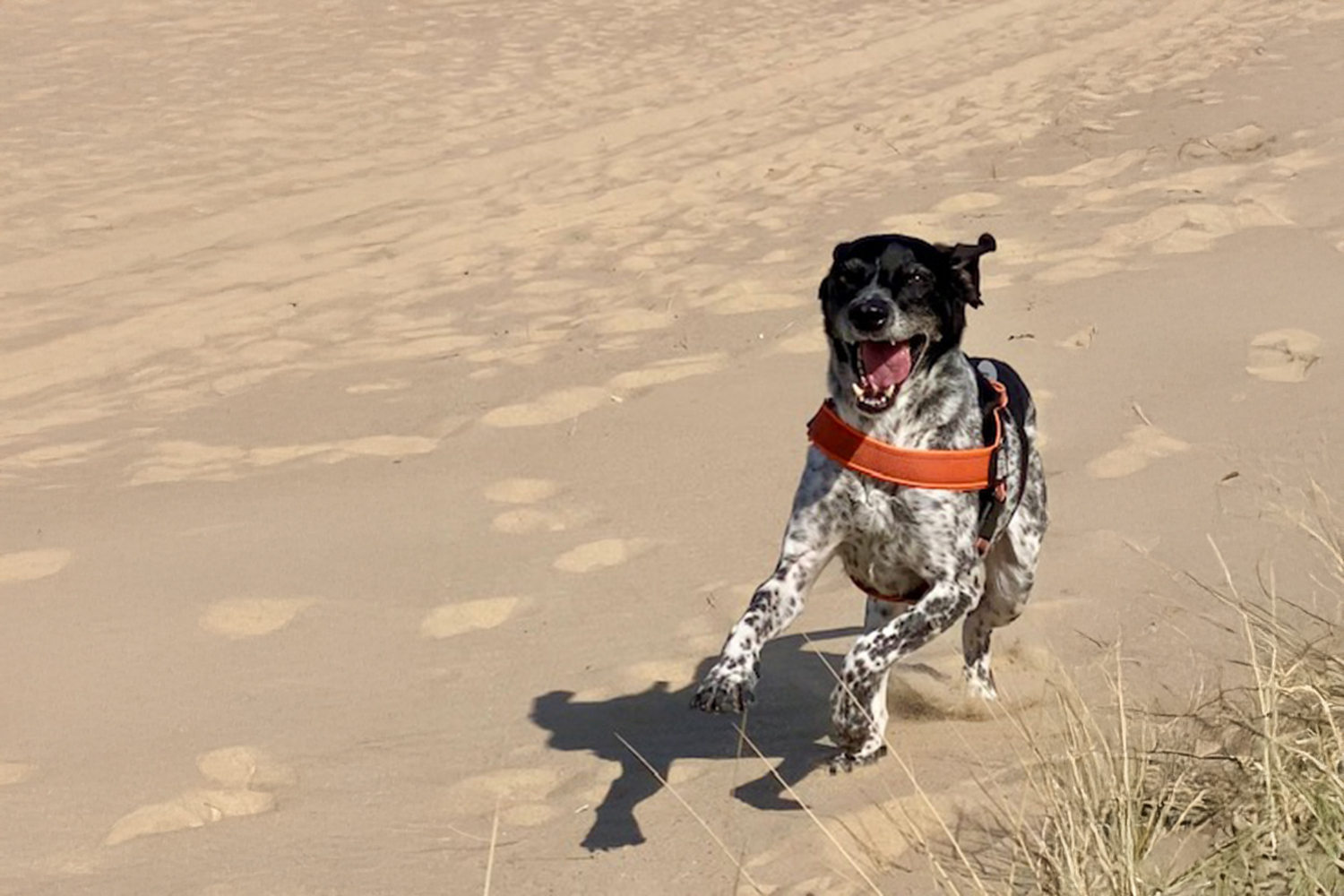 Tobi, a mixed-breed hunting dog on his way back to lifeTobi was seriously ill – but a vegan diet helped him recover. An inspiring story of hope.Read More
-
 Experience report from Gerty with LokiAfter ongoing digestive issues and several food trials, a vegan diet provided a stable solution for Loki.Read More